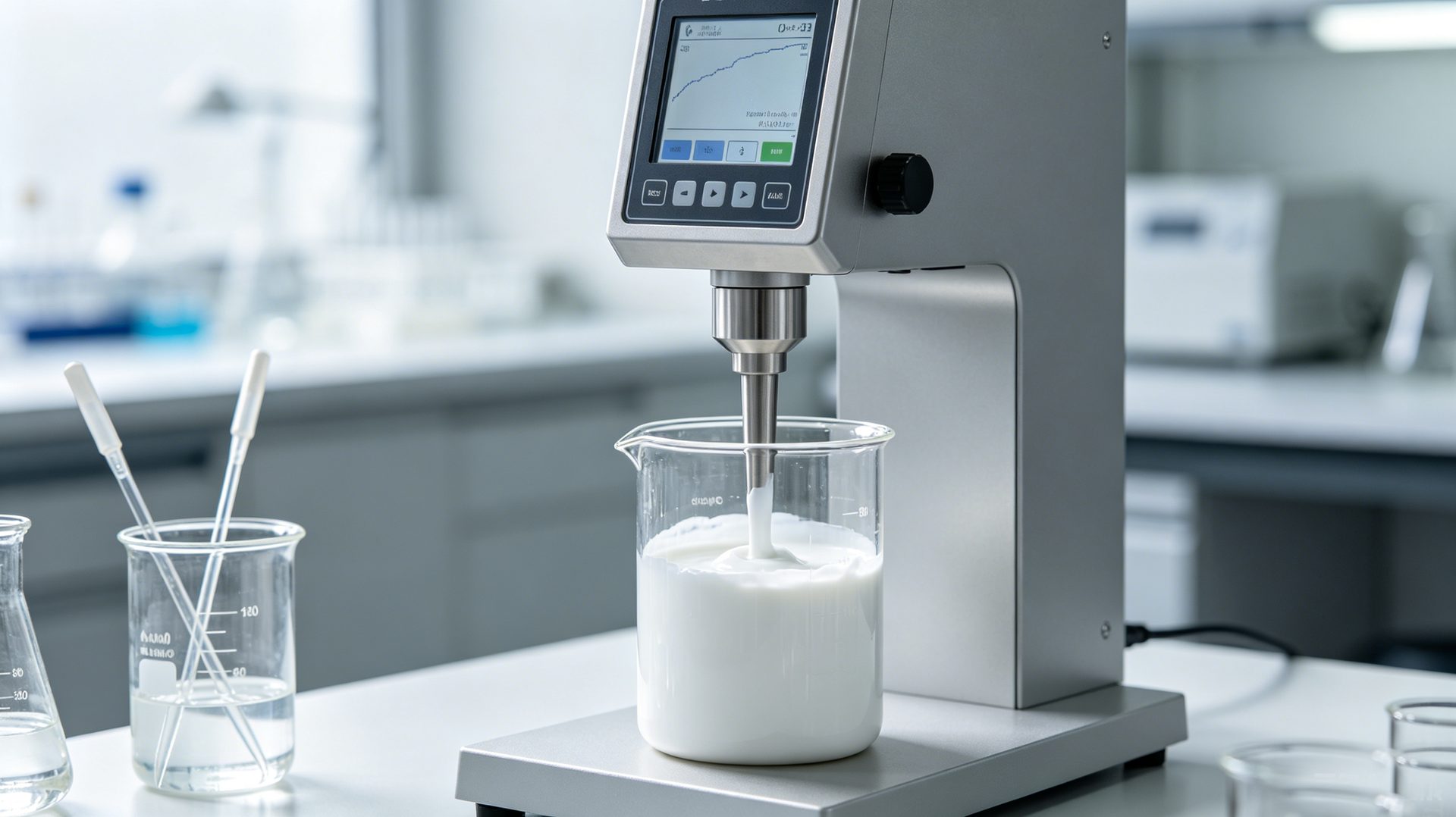
Rheology Modifier Definition
Rheology modifier: A functional additive that alters the flow and deformation properties (viscosity, yield stress, thixotropy, elasticity) of a liquid or semi-solid formulation without chemically reacting with other components. Selected based on system compatibility (solvent-based, water-based, oil-based) and target performance (anti-settling, anti-sagging, thixotropy, or viscosity control).
A rheology modifier controls behavior across three critical phases of a formulation's life:
- Storage: High low-shear viscosity → prevents pigment settling; no hard cake
- Application (high shear): Controlled viscosity reduction → easy pumping, spraying, brushing, leveling
- Post-application (low shear): Rapid viscosity recovery → no sagging on vertical surfaces; film holds
What Rheology Modifiers Control
| Property | Effect | Application Benefit |
|---|
| Low-shear viscosity | Increase | Prevents pigment settling, anti-sagging |
| High-shear viscosity | Control | Film build, spray atomization |
| Yield stress | Increase | Anti-sag on vertical surfaces |
| Thixotropy | Impart | Brush/spray application, self-leveling |
Types of Rheology Modifiers
| Type | Examples | Best System |
|---|
| Clay-based (inorganic) | Organoclay, bentonite, attapulgite | Solvent-based, oil-based systems |
| Silica-based | Fumed silica, precipitated silica | Coatings, adhesives |
| Polymer-based | HASE, HEUR, polyurethane thickeners | Waterborne coatings |
| Wax-based | Hydrogenated castor oil, polyamide | Solvent coatings, inks |
| Cellulose-based | HEC, CMC, HPMC | Water-based systems |
Organoclay as a Rheology Modifier
Organoclay is the leading rheology modifier for solvent-based and oil-based industrial systems. It provides strong thixotropy, anti-settling, and yield stress at low treat rates (0.3–3%), is thermally stable up to 180°C, and is chemically inert. Learn more about organoclay →
Frequently Asked Questions
What does a rheology modifier do?
A rheology modifier controls viscosity, yield stress, thixotropy, and flow behavior in a formulation — simultaneously enabling high viscosity at rest (anti-settling), low viscosity under application shear (easy flow), and rapid viscosity recovery after application (anti-sagging). One additive (organoclay) addresses all three in solvent-based systems at 0.2–2.0 wt%.
What is an example of a rheological modifier?
Solvent-based: organoclay, fumed silica, polyamide wax, hydrogenated castor oil. Water-based: HASE, HEUR polymers, HEC, bentonite. Oil-based drilling: organoclay, attapulgite. Greases: organoclay thickener, lithium soap. Organoclay is the dominant rheology modifier for solvent-based and oil-based industrial systems globally.
What is the purpose of rheology in formulation?
Rheology control ensures product performance across three phases: storage (high low-shear viscosity → no pigment settling), application (reduced viscosity under shear → easy flow and leveling), and post-application (rapid viscosity recovery → no sagging or dripping). Rheology modifiers are the additives that engineer this three-phase control.
Is organoclay a rheology modifier?
Yes. Organoclay is one of the most widely used rheology modifiers for solvent-based and oil-based industrial systems. It provides thixotropy, anti-settling, yield stress, and sag control at 0.2–2.0 wt% in coatings. Main advantages: broad solvent compatibility, thermal stability to 180°C, dual anti-settling and anti-sagging function, and chemical inertness.
View organoclay grades → Related: Thixotropic Agent · Viscosity Control · Organoclay vs Fumed Silica