Instant Connect

Scan to connect via WhatsApp or WeChat
Selective adsorbent for hydrophobic organic contaminants — removes petroleum hydrocarbons, BTEX, chlorinated solvents, PAHs, PCBs, and PFAS from industrial wastewater and contaminated groundwater through hydrophobic partitioning.
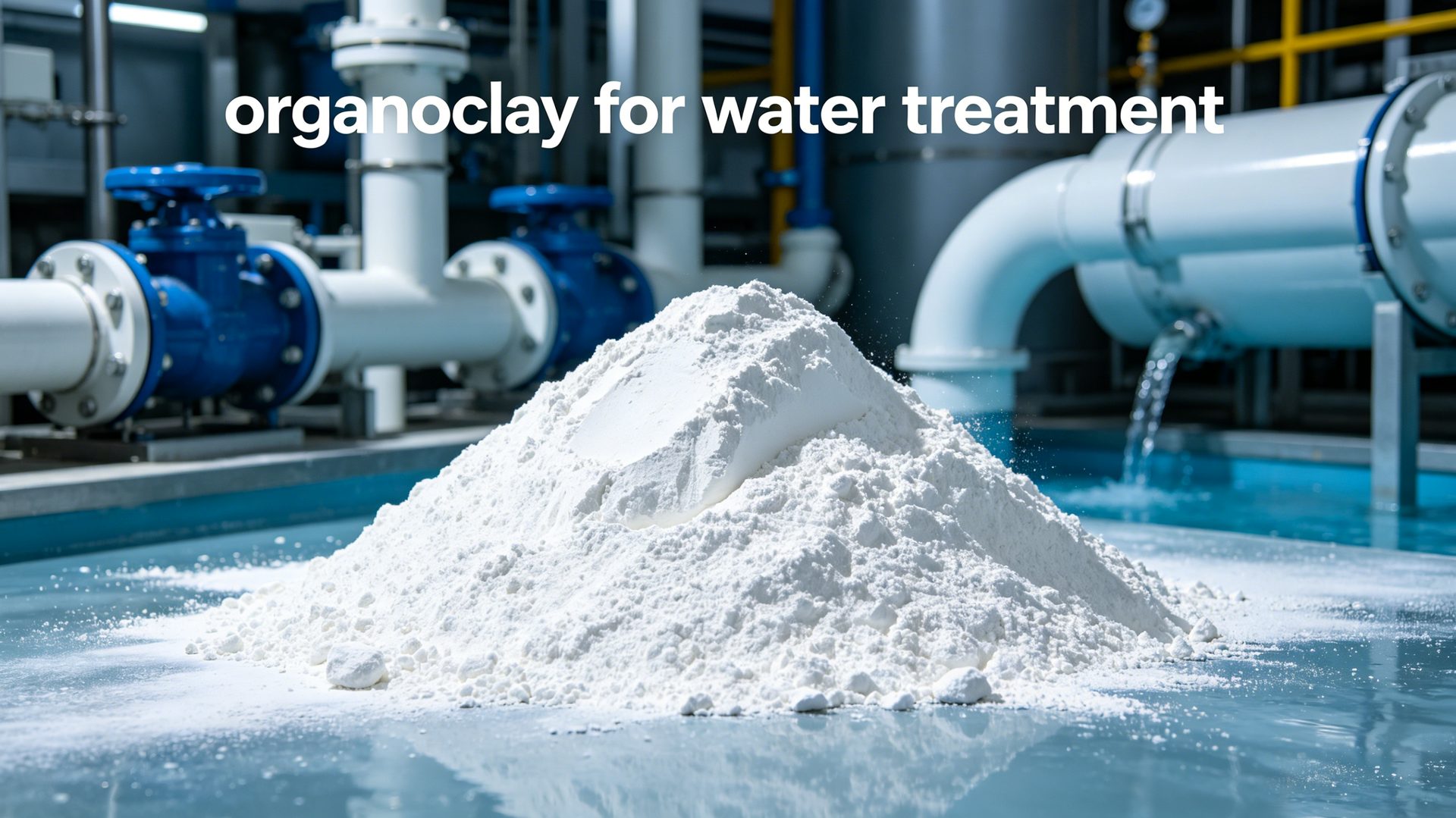
The two water treatment use cases we serve most frequently are: petroleum wastewater treatment (oilfield produced water, refinery effluent, and fuel terminal runoff) and paint and coatings factory wastewater (rinse water containing solvent-borne paint residues, resin dispersions, and colorant carryover). In both cases, the common thread is the need to remove hydrophobic organic compounds that resist conventional biological or physical treatment methods.
For these applications, our recommended grade is CP-200 — a high-adsorption organoclay specifically designed for water treatment. Its high organic modifier content provides a large hydrophobic surface area for partitioning and retaining petroleum hydrocarbons and paint-related organics at trace concentrations. If you are treating petroleum-contaminated water or industrial paint wastewater and need a specific adsorption performance figure for your system, contact us — we can provide CP-200 sample data matched to your target contaminant.
The organoclay removal mechanism is described by the distribution coefficient:
| Parameter | Definition | Implication |
|---|---|---|
| Kd (distribution coefficient, L/kg) | Kd = Koc × foc | Higher Kd = more contaminant captured per kg organoclay |
| Koc (organic carbon partition coefficient) | Contaminant-specific constant | Higher Koc compounds (BTEX, PAHs, PCBs) are removed more efficiently |
| foc (organic carbon fraction) | Related to organoclay LOI — higher LOI = higher foc | Higher LOI organoclay → greater uptake capacity per unit weight |
| Contaminant Class | Examples | Removal Efficiency | Mechanism |
|---|---|---|---|
| BTEX compounds | Benzene, toluene, ethylbenzene, xylenes | Very high | Hydrophobic partitioning |
| Petroleum hydrocarbons | TPH, diesel range organics (DRO), gasoline range organics (GRO) | Very high | Hydrophobic partitioning |
| Polycyclic aromatic hydrocarbons (PAHs) | Naphthalene, anthracene, benzo[a]pyrene | Very high | Hydrophobic partitioning |
| Polychlorinated biphenyls (PCBs) | Aroclor mixtures, specific congeners | Very high | Hydrophobic partitioning |
| Chlorinated solvents | TCE, PCE, DCE, TCA, vinyl chloride | High | Hydrophobic partitioning |
| PFAS | PFOA, PFOS, shorter-chain PFAS | Moderate–High | Hydrophobic + electrostatic |
| Oils and grease | Mineral oil, cutting oil, animal fat | High | Partitioning / absorption |
| Pesticides (non-polar) | Atrazine, DDT, chlordane, endrin | High | Hydrophobic partitioning |
| Heavy metals | Cd, Pb, Hg (limited) | Low–Moderate | Cation exchange (limited) |
| Application | Configuration | Target Contaminants |
|---|---|---|
| Industrial wastewater polishing | Packed column filter; batch treatment vessel | Residual hydrocarbons after primary separation; BTEX |
| Produced water treatment (oil & gas) | Column filtration after primary oil/water separator | Dissolved and residual hydrocarbons to discharge standard |
| Groundwater pump-and-treat | Packed bed column; granular media (8–30 mesh) | BTEX, chlorinated solvent plumes, petroleum releases |
| Permeable reactive barrier (PRB) | In-situ subsurface trench; 5–30% OC in sand | BTEX, chlorinated solvents, petroleum hydrocarbons |
| In-situ stabilization (S/S) | Mixed into contaminated soil in-place | PCBs, dioxins, PAHs — immobilization and leachability reduction |
| Stormwater treatment | Catch basin filter; stormwater vault media | First-flush petroleum hydrocarbons; industrial stormwater |
| Landfill liner enhancement | Mixed with native soil or bentonite | Leachate hydrocarbon barrier; improved liner performance |
| Refinery / petrochemical effluent | Column polishing step before biological treatment | BTEX, PAHs, phenols before biological treatment stage |
| Property | Organoclay | Granular Activated Carbon (GAC) |
|---|---|---|
| Removal mechanism | Hydrophobic partitioning | Surface adsorption |
| Best for | High-MW, strongly hydrophobic HOCs (PAHs, PCBs, oils) | Wide range including polar organics |
| Competitive adsorption | Less affected by co-contaminants | More affected — multiple compounds compete for surface sites |
| Performance at ppb levels | Effective (partitioning remains efficient at low concentrations) | Effective (high surface area) |
| Regeneration | Generally not regenerated — disposal or in-situ use | Can be thermally regenerated |
| Cost position | Lower than GAC | Higher initial cost; regeneration possible |
| Common use case | PRB, in-situ S/S, industrial wastewater polishing | Drinking water treatment, broad organic removal |
Recommended grades for water treatment: CP-EW (water-dispersible organoclay) · CP-EWS (improved water-based grade) · CP-WBS (high-viscosity water-based)
Related pages: Organoclay Adsorption Guide · What is Organoclay? · Quality Certifications
Tell us your target contaminants and treatment configuration — we'll provide grade recommendations, adsorption capacity data, and free samples.
We reply within 24 hours on business days.
Thank you! Your inquiry has been received.
We'll get back to you within 24 hours.
WeChat ID
0086-13185071071