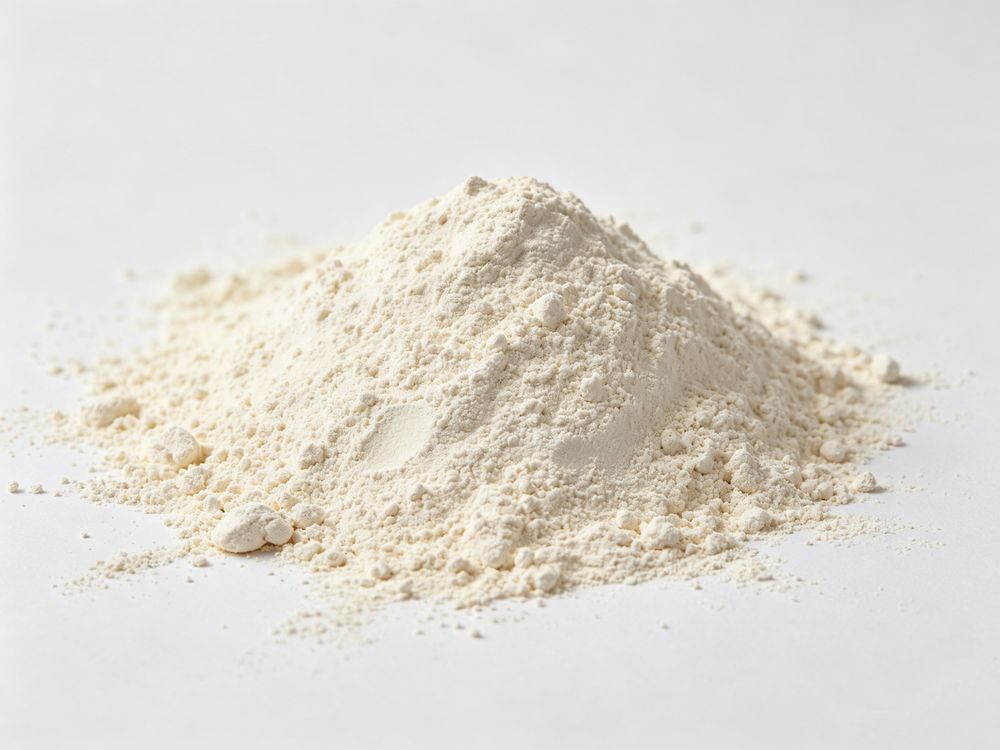
Purified organophilic clay thickener for high-temperature lubricating greases. Compatible with synthetic, mineral, diester, polyester, and vegetable oils. Drop point exceeding 260°C. NLGI 1–3 consistency at 7–10 wt% loading.
CP-250A is a purified and refined organophilic clay specifically engineered for lubricating grease production. Unlike standard organoclay grades used in coatings, CP-250A undergoes additional purification and particle size control to achieve the smooth, homogeneous gel structure required for grease applications. The inorganic clay platelet thickener network does not melt — giving CP-250A-based greases exceptional thermal stability and reversible consistency through repeated heating and cooling cycles, which soap-based greases cannot achieve.
Technical Properties
Parameter
Specification
Test Method
Chemical composition
Organic derivative of montmorillonite clay (purified)
—
Appearance
Fine powder, light yellow
Visual
Moisture content
≤ 3.5%
105°C, 2 hours
Loss on ignition (LOI)
34–36%
1000°C
Bulk density
0.42 g/cm³
—
Fineness
≥ 98% passing 74 μm (200 mesh)
Sieve analysis
Grease Performance Characteristics
High gelling efficiency — effective at 7–10 wt% in base oil; higher loadings (10–15 wt%) produce stiffer NLGI 2–3 consistency
Light-colored, high-clarity gel — suitable for greases where appearance and cleanliness are required
Self-thickening with activator — forms grease consistency with acetone/water activator; no complex processing equipment required beyond standard mixing and colloid milling
Post-correction capability — consistency can be adjusted after initial production without batch rejection
Consistent thixotropic profile — reproducible NLGI grade batch to batch with controlled production procedure
High-temperature stability — clay platelet network does not melt; consistent performance from −20°C to 200°C service temperature
Compatible Base Oils
Base Oil Type
Typical CP-250A Loading
Notes
Mineral oil (Group I/II, mid-to-high viscosity)
7–12 wt%
Standard application; good performance
Polyalphaolefin (PAO, synthetic)
8–13 wt%
Excellent high-temperature stability
Diester (synthetic)
8–12 wt%
Good biodegradability option
Polyester (synthetic)
8–12 wt%
High-temperature and oxidation resistance
Vegetable oil (renewable)
8–13 wt%
Biodegradable grease for environmental compliance
Key Performance Advantage: CP-250A greases do not suffer irreversible softening above service temperature — unlike soap greases that liquefy when heated past their drop point. After overheating and cooling, CP-250A grease consistency recovers substantially, significantly reducing equipment relubrication frequency in high-temperature continuous service.
Grease Formulation Procedure
Heat base oil to 60–70°C if process conditions permit (improves CP-250A dispersion rate)
Add CP-250A at 7–10 wt% of total formulation while stirring; mix 5–10 minutes under agitation
Add polar activator: acetone/water (95:5 ratio) at 20–30% of CP-250A weight (approximately 2–3% of total formulation)
Add other additives (antioxidants, corrosion inhibitors, EP additives) as required by formulation
Stir 25–30 minutes at moderate to high speed
Pass through colloid mill and homogenizer — this step is critical for smooth, homogeneous grease texture; shear processing significantly improves final consistency
Deaerate, filter, and package
Grease Consistency Guide
Target NLGI Grade
CP-250A Loading (mineral oil)
Worked Penetration (ASTM D217)
NLGI 1 (soft)
7–8 wt%
310–340 (0.1 mm)
NLGI 2 (standard)
8–10 wt%
265–295 (0.1 mm)
NLGI 3 (stiff)
10–13 wt%
220–250 (0.1 mm)
Frequently Asked Questions
What is CP-250A organoclay used for?
CP-250A is used as a thickener for high-temperature lubricating greases in synthetic, mineral, diester, polyester, and vegetable oil base stocks. At 7–10 wt% with acetone/water activator, it produces NLGI 1–3 greases with drop points exceeding 260°C — for kiln bearings, steel mill rolls, and other high-temperature continuous service applications. Full grease application guide →
What is the drop point of grease made with CP-250A?
CP-250A greases at 8–12 wt% in Group II or synthetic base oil achieve drop points exceeding 260°C (ASTM D2265) — above lithium complex (240–260°C) and significantly above standard lithium soap (175–185°C). The clay platelet network does not melt, so CP-250A greases recover consistency after overheating, while soap greases liquefy irreversibly. High-temperature stability guide →
Does CP-250A require a polar activator for grease production?
Yes. Acetone/water (95:5) at 20–30% of CP-250A weight is required. The activator promotes clay platelet exfoliation and gel structure development. After mixing activator, pass the grease through a colloid mill or homogenizer for best results — shear processing is critical for smooth, consistent texture. The activator represents approximately 2–3% of the total formulation weight.