Instant Connect

Scan to connect via WhatsApp or WeChat
Organoclay (organophilic clay, organobentonite, organic bentonite) is a chemically modified smectite clay mineral that functions as a thixotropic rheology modifier, anti-settling agent, and gelling agent in solvent-borne, oil-based, and non-aqueous industrial systems.
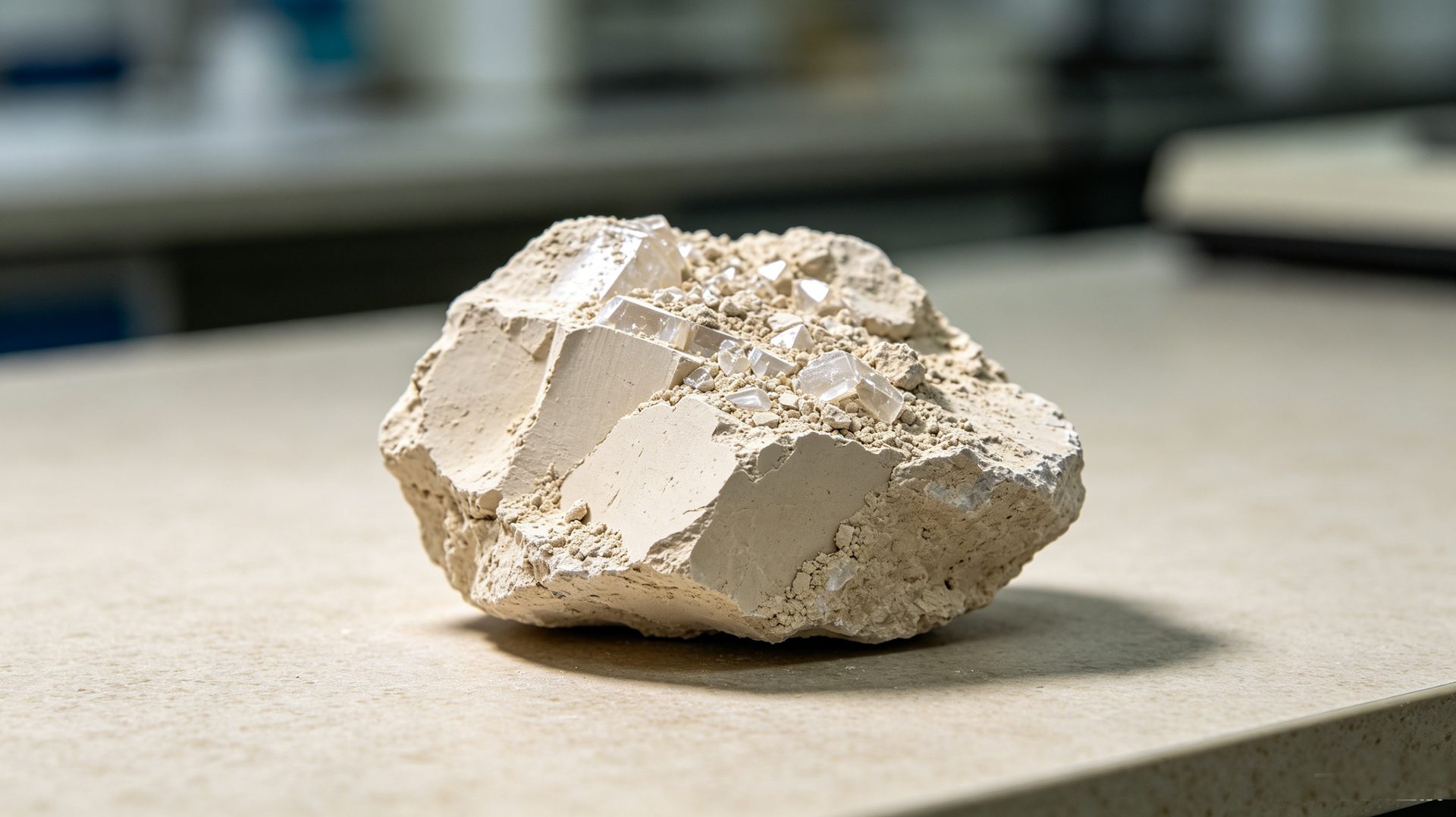
In practical terms: bentonite swells in water; organoclay swells in oil and organic solvents. That single difference — achieved by one chemical modification step — is what makes organoclay the standard rheological additive for solvent-based coatings, oil-based drilling fluids, and lubricating greases worldwide.
Organoclay is made from two primary components:
| Component | Material | Key Parameter |
|---|---|---|
| Base clay | Natural sodium montmorillonite (high-purity bentonite) | CEC 80–120 meq/100g; platelet size 200–500 nm × ~1 nm thick |
| Organic modifier | Quaternary ammonium compound — typically dimethyl dihydrogenated tallow ammonium chloride (DMDA) or trimethyl hydrogenated tallow ammonium chloride | Final organic content: 28–42 wt% (measured as LOI at 1000°C) |
The high cation exchange capacity of montmorillonite (80–120 meq/100g) allows efficient ion exchange with the bulky quaternary ammonium cation, while its large platelet aspect ratio (200–500:1) enables effective gel network formation at dosages as low as 0.3–1.5 wt%.
Industrial organoclay production uses the wet process, which delivers higher purity and more complete ion exchange than the alternative dry process:
Clay–Na⁺ + [R₄N]⁺Cl⁻ → Clay–[R₄N]⁺ + NaCl When organoclay powder is dispersed in an organic solvent system under high shear (1,500–3,000 rpm for 15–20 minutes), the following sequence occurs:
This network produces the defining property of organoclay — thixotropy:
| Condition | Network State | Viscosity | Practical Effect |
|---|---|---|---|
| At rest (storage) | Intact "house-of-cards" | High | Pigments stay suspended; no settling |
| Under shear (application) | Network disrupted | Low | Easy pumping, spraying, brushing |
| After shear (applied film) | Network rebuilds (seconds to minutes) | High returns | No sagging on vertical surfaces |
| Property | Typical Value |
|---|---|
| Physical form | Free-flowing white to light-yellow powder |
| Moisture content (105°C, 2 hr) | ≤ 3.5% |
| Particle size (200 mesh, 74 μm) | ≥ 95% passing |
| Bulk density | 0.35–0.60 g/cm³ |
| Specific gravity | ~1.6–1.7 g/cm³ |
| Loss on ignition (LOI, 1000°C) | 26–42% (grade-dependent; indicates organic modifier content) |
| Thixotropic index (1 wt% in xylene) | ≥ 4.0 (conventional grades); ≥ 3.5 (self-activating grades) |
| Shelf life | 2 years (sealed, dry, below 50°C) |
| GHS hazard classification | Not classified as hazardous |
| Type | Activation | LOI Range | Best For | CP Grades |
|---|---|---|---|---|
| Conventional (Type A) | Requires polar activator (ethanol or propylene carbonate) | 26–32% | Aromatic / medium-polarity solvent systems; maximum gel strength | CP-34, CP-40, CP-982 |
| Self-Activating (Type B) | No activator needed (PC pre-coated) | 32–42% | High-solid coatings; simplified plant processing; OBM drilling | CP-180B, CP-992 |
| Water-Dispersible (Type C) | Water dispersion | 12–20% | Waterborne coatings; cosmetics; aqueous systems | CP-EW |
| Grease Grade (Type D) | Heat + shear | 28–35% | Lubricating grease thickener; stable to 180°C | CP-250A |
Grade selection depends primarily on the polarity of the continuous phase solvent or oil. The Kauri-Butanol (KB) value is the standard measure:
| Polarity Level | KB Value | Typical Solvents | Recommended Grade | Activator |
|---|---|---|---|---|
| Non-polar | < 30 | Mineral spirits, aliphatic naphtha, hexane | CP-40 | Required |
| Low-medium polarity | 30–50 | White spirit, VM&P naphtha, mineral oil | CP-34 | Required |
| Medium polarity | 50–65 | Xylene, toluene | CP-34 / CP-180B | Optional (SA grade: none) |
| High polarity | 65–85 | Butyl acetate, MEK, ketone/ester blends | CP-180B | None required |
| Aqueous | — | Water, water-cosolvent blends | CP-EW | Water dispersion |
In oil-based drilling fluids, base oil type determines grade choice: diesel/mineral oil base → CP-34 or CP-982; synthetic base (IO, LAO) → CP-992 or CP-180B.
| Industry | Primary Function | Typical Treat Rate |
|---|---|---|
| Paints & Industrial Coatings | Anti-settling, anti-sagging, thixotropy | 0.3–1.5 wt% |
| Oil-Based Drilling Fluids (OBM) | Viscosity building, suspension, filtration control | 1.5–4.0 lb/bbl |
| Lubricating Greases | Thickener (no drop point); thermal stability | 8–15 wt% on base oil |
| Printing Inks | Thixotropy, anti-misting, anti-settling | 0.5–2.0 wt% |
| Adhesives & Sealants | Sag resistance, thixotropic structure | 0.5–2.0 wt% |
| Cosmetics & Personal Care | Suspension, texture, emulsion stability | 0.5–2.0 wt% |
| Water Treatment | Adsorption of hydrophobic contaminants | Application-specific |
| Construction & Asphalt | Viscosity modification, anti-settling | 0.3–1.5 wt% |
When a customer contacts us for the first time, they often say: "We need bentonite." This is the single most common misunderstanding we encounter. Bentonite is a naturally occurring mined clay mineral — it is hydrophilic, it swells in water, and it is used in water-based drilling fluids, civil engineering, and foundry applications. Bentonite alone will not function as a rheology modifier in paints, oils, or greases.
Organoclay is bentonite that has gone through an amine modification process — the natural interlayer cations are replaced with organic quaternary ammonium compounds, converting the clay from hydrophilic to organophilic. That modification is what makes organoclay work in oil-based systems: paints, coatings, drilling fluids, lubricating greases, printing inks, sealants, and cosmetics. If you need something that disperses in an organic solvent or oil and provides viscosity control, thixotropy, pigment suspension, or anti-settling performance — that is organoclay, not bentonite.
Our practical one-sentence description when introducing organoclay to a new customer: "It is a modified bentonite clay that gives you thixotropy and suspension in any oil-based or solvent-based system — high viscosity at rest, low viscosity under shear, and it stays stable over the full temperature range of your application."
| Property | Natural Bentonite | Organoclay |
|---|---|---|
| Surface character | Hydrophilic | Organophilic (hydrophobic) |
| Swelling medium | Water | Organic solvents / oils |
| Interlayer spacing | ~1.0–1.2 nm (dry) | ~1.8–4.2 nm (expanded after modification) |
| Interlayer cation | Na⁺, Ca²⁺ (inorganic) | Quaternary ammonium (organic) |
| Application environment | Water-based drilling fluids, civil engineering, foundry | Solvent coatings, OBM drilling, grease, cosmetics |
| Modification required | No | Yes — ion exchange with quaternary ammonium compounds |
| Property | Organoclay | Fumed Silica | HPMC | Castor Oil Wax |
|---|---|---|---|---|
| Compatible system | Solvent / oil-based | Solvent / water | Water-based | Solvent-based |
| Thixotropy | Excellent | Good | Moderate | Good |
| Anti-settling | Excellent | Good | Poor | Moderate |
| Temperature stability | Excellent (to 180°C+) | Good | Fair | Poor (melts <85°C) |
| Transparency in clear coat | Good–Excellent | Poor (hazy) | N/A | Poor |
| Typical dosage | 0.3–2.0 wt% | 0.5–3.0 wt% | 0.1–1.0 wt% | 0.5–3.0 wt% |
Related knowledge: How Organoclay Works (Mechanism) · What is a Rheology Modifier? · What is a Thixotropic Agent? · What is Bentonite? · Organoclay vs Fumed Silica
ISO 9001:2015 certified. Free samples for performance verification. TDS, SDS, and COA provided with every inquiry.
We reply within 24 hours on business days.
Thank you! Your inquiry has been received.
We'll get back to you within 24 hours.
WeChat ID
0086-13185071071