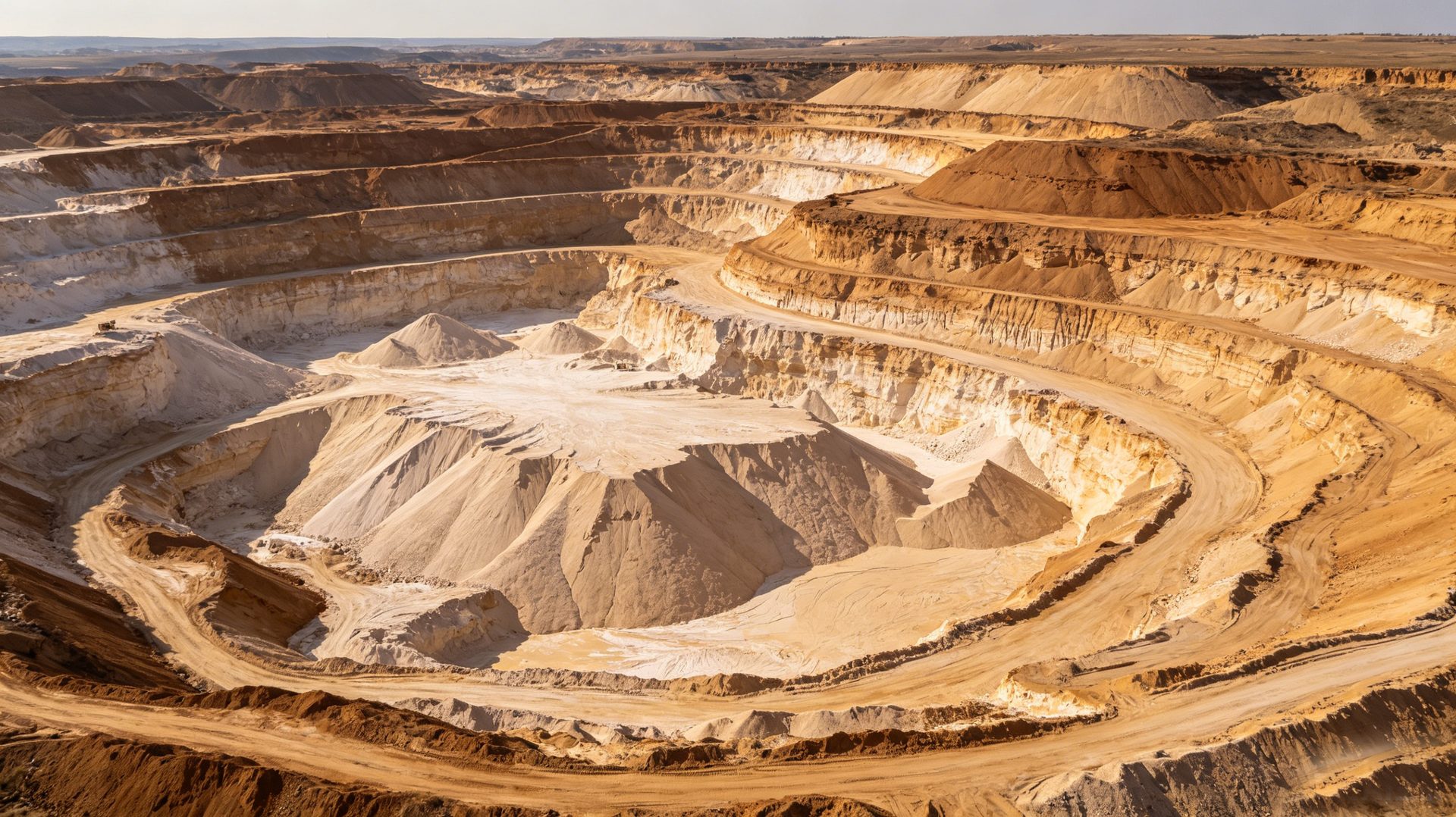
Bentonite Definition
Bentonite is a naturally occurring sedimentary clay rock formed from the weathering of volcanic ash, composed predominantly of montmorillonite (a smectite group phyllosilicate). It is characterized by a high CEC (70–120 meq/100g) and exceptional water-swelling capacity (15–20× dry volume for sodium bentonite). Hydrophilic — swells in water, not in organic solvents.
Bentonite is a naturally occurring sedimentary clay rock formed from the weathering and alteration of volcanic ash, composed predominantly of the clay mineral montmorillonite (a 2:1 phyllosilicate in the smectite group). It is characterized by a high surface area, strong cation exchange capacity (CEC: 70–120 meq/100g), and the ability to swell 15–20 times its dry volume when hydrated with water.
Types of Bentonite
| Type | Interlayer Cation | Swelling | Primary Use |
|---|
| Sodium bentonite | Na⁺ | High (15–20×) | Drilling fluids, geotechnical liners |
| Calcium bentonite | Ca²⁺ | Low (1–2×) | Foundry, animal feed, pharmaceuticals |
| Organoclay (modified) | Quaternary ammonium | In oil (not water) | Paints, drilling fluids, cosmetics |
How Bentonite Becomes Organoclay
Sodium bentonite is the starting material for organoclay production. The natural Na⁺ interlayer cations are replaced by long-chain quaternary alkylammonium cations through an ion-exchange process, converting the hydrophilic clay to an organophilic material suitable for oil-based systems. Learn more about organoclay →
Bentonite Uses
- Water-based drilling fluids — viscosifier and filtration control
- Iron ore pelletizing — binder
- Geosynthetic clay liners (GCL) — landfill and pond sealing
- Foundry sand — green sand bonding
- Cat litter — clumping absorbent
- Food/beverage — wine and juice clarification
- Cosmetics and pharmaceuticals — excipient and thickener
Frequently Asked Questions
What are the disadvantages of bentonite?
(1) Hydrophilic only — cannot be used in solvent-based, oil-based, or non-aqueous systems; (2) Inhibited by salinity — performance degrades in high-salt or hard water (Ca²⁺, Mg²⁺ inhibit swelling); (3) Limited high-temperature stability — significant performance degradation above 130–150°C in drilling fluids; (4) Not suitable for oil-based drilling fluids (OBM) — organoclay is required for oil-continuous systems. For these limitations, organoclay or other specialty additives replace bentonite.
What is bentonite used for?
Water-based drilling fluids (viscosifier and filtration control); iron ore pelletizing (binder); geosynthetic clay liners (GCL) for landfill and pond sealing; foundry sand green sand bonding; cat litter (clumping absorbent); food and beverage processing (wine, juice clarification, beer fining); cosmetics and pharmaceuticals (excipient); civil engineering (slurry walls, tunneling, horizontal directional drilling).
What is the difference between bentonite and organoclay?
Bentonite (hydrophilic) swells in water — used in water-based systems (WBM drilling, geotechnical liners, foundry). Organoclay is chemically modified bentonite where interlayer Na⁺/Ca²⁺ cations are replaced by organic quaternary ammonium cations — making it organophilic (swells in oil and solvents). For solvent-based coatings, OBM drilling, and lubricating greases, organoclay is required; bentonite will not function in these non-aqueous systems.
What is organoclay? → Related: What is Montmorillonite? · What is Organoclay? · Organoclay for Drilling Fluids