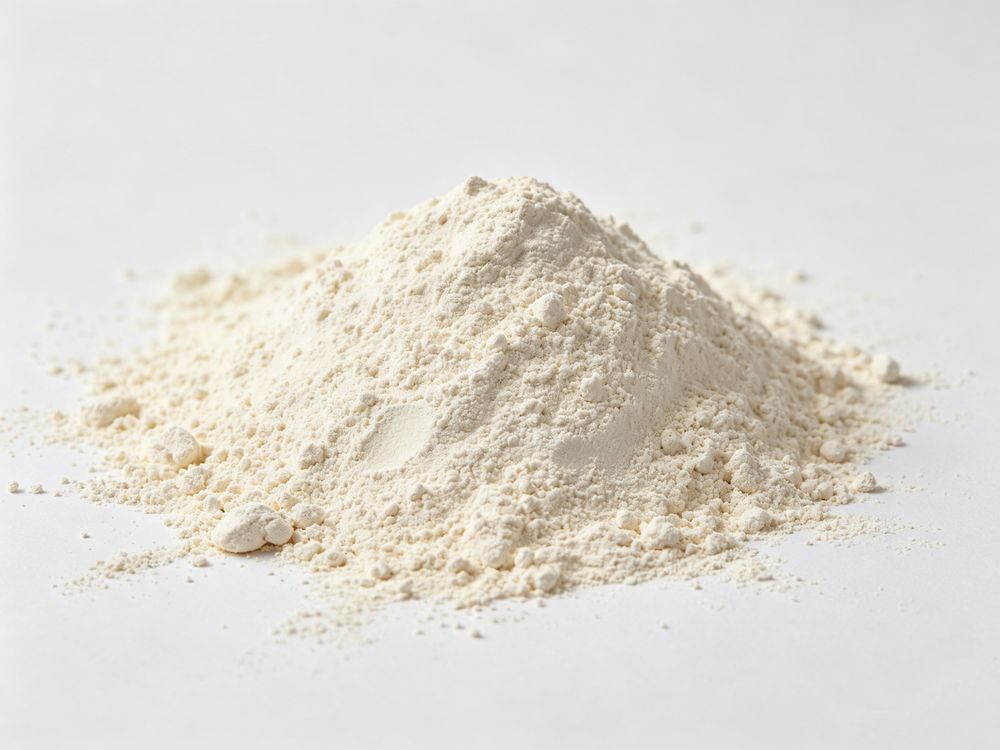
CP-APA is a self-activating organophilic clay designed for formulations where conventional organoclay grades require a separate polar activator step. Through engineered surface modification, CP-APA spontaneously disperses and forms a thixotropic gel network in moderate to highly polar solvents — including ketones, esters, ether esters, and aromatic blends — without ethanol, methanol, or other polar activators. This simplifies the incorporation process, eliminates activator-related VOC contribution, and improves compatibility in polar mixed-solvent systems.
Technical Properties
| Parameter | Specification | Test Method |
|---|
| Chemical composition | Organic derivative of montmorillonite clay | — |
| Appearance | Fine powder, off-white | Visual |
| Moisture content | ≤ 3.5% | 105°C, 2 hours |
| Loss on ignition (LOI) | 32–35% | 1000°C |
| Bulk density | 0.35–0.45 g/cm³ | — |
| Fineness | ≥ 98% passing 74 μm (200 mesh) | Sieve analysis |
| Activation | Self-activating — no polar activator required | — |
Performance Characteristics
- Self-activating — no polar activator (ethanol/methanol) required; simplifies formulation process and reduces VOC contribution from activator
- High efficiency in polar systems — outperforms conventional organoclay in ketone, ester, and mixed aromatic/polar solvent systems
- Easy incorporation — can be added as direct powder before the grinding/dispersion step; no pre-gel preparation required
- Post-correction capability — viscosity can be adjusted after initial formulation without batch rejection
- Wide solvent polarity range — effective from moderately polar (xylene/butyl acetate blends) to highly polar (MEK, cyclohexanone) systems
Compatible Solvent Systems and Applications
| Solvent System | Application | Typical Dosage |
|---|
| Ketones (MEK, MIBK, cyclohexanone) | High-solid industrial coatings, epoxy, PU | 0.3–1.5 wt% |
| Esters (butyl acetate, ethyl acetate) | PU coatings, automotive finishes | 0.3–1.2 wt% |
| Ether esters (PGMEA, PM acetate) | High-solid, low-VOC coatings | 0.3–1.0 wt% |
| Aromatic/polar blends | Alkyd, epoxy, bituminous coatings | 0.3–1.5 wt% |
| Sealants and adhesives | Non-sag, thixotropic sealants | 0.5–2.0 wt% |
| Cosmetic formulations | Lipstick, eyeshadow, color cosmetics | 1.0–5.0 wt% |
| Nano-composite systems | Polymer nano-composite preparation | 1.0–10 wt% |
When to Choose CP-APA vs CP-34: Use CP-APA when your formulation contains ketones, esters, or alcohols, when you want to eliminate the polar activator step, or when VOC reduction is required. Use CP-34 when your solvent system is pure aromatic (xylene/toluene) and maximum gel efficiency is the priority — CP-34 with full activation provides slightly higher yield point in aromatic-only systems.
Incorporation Method
Direct Powder Addition (Recommended)
- Add CP-APA before the grinding step — best results are achieved when CP-APA is incorporated before pigment grinding; the grinding shear aids dispersion
- Add at 0.2–2.0% of total formulation weight; no polar activator required
- Disperse at high shear (1,500–3,000 rpm) for 10–15 minutes
- Proceed with normal formulation sequence — add pigments, fillers, and other additives
- Post-correct if needed — add additional CP-APA dispersion to adjust viscosity after formulation
Grade Comparison
| Property | CP-APA | CP-34 | CP-EW |
|---|
| Activation | Self-activating | Requires polar activator | Water-dispersible |
| Best solvent system | Polar + aromatic blends | Aromatic (xylene, toluene) | Water-based only |
| Gel efficiency (aromatic) | Good | Excellent | N/A |
| VOC contribution | Lower (no activator) | Higher (ethanol activator) | None |
| Process simplicity | Simple (direct addition) | Pre-gel required | Simple (direct addition) |
Frequently Asked Questions
What makes CP-APA self-activating?
CP-APA uses a modified quaternary ammonium surface treatment compatible with polar solvent systems, allowing clay platelets to spontaneously exfoliate and form gel in ketone, ester, and aromatic solvents without a separate polar activator. Conventional organoclay (CP-34) requires ethanol or methanol to activate gel development — CP-APA eliminates this step, simplifying formulation and reducing VOC from the activator.
What solvents is CP-APA compatible with?
CP-APA is compatible with ketones (MEK, MIBK, cyclohexanone), esters (butyl acetate, ethyl acetate), ether esters (PGMEA, PM acetate), alcohols, and aromatic hydrocarbons (xylene, toluene). Particularly suitable for high-solid coatings, two-component PU systems, epoxy systems, and UV-curable coatings in polar mixed-solvent systems.
When should I choose CP-APA over CP-34?
Choose CP-APA when: your solvent system contains ketones, esters, or alcohols; you cannot add a separate polar activator; you are formulating high-solid or low-VOC coatings; or you want simple direct powder addition without pre-gel. Choose CP-34 for pure aromatic systems (xylene/toluene) where maximum gel efficiency is the priority — CP-34 with full ethanol activation gives higher yield point in aromatic-only systems.
Packaging and Storage
| Parameter | Specification |
|---|
| Standard packaging | 25 kg kraft paper bags with PE inner liner; 22.68 kg bags available |
| Shelf life | 2 years from manufacture date |
| Storage conditions | Cool, dry, well-ventilated warehouse; avoid moisture exposure |
Related grades: CP-34 (conventional, requires activator) ·
CP-EW (water-based systems) ·
CP-982 (drilling fluid)
Related applications: Paint & Coatings ·
Adhesive & Sealant ·
Cosmetics ·
Anti-Sagging Guide