CP-EWS Water-Based Organoclay — Technical Data Sheet
Improved water-dispersible organoclay with superior thixotropy, transparency, and dispersion compared to standard water-based grades. Viscosity ≥3,000 mPa·s at 3% in water. For waterborne paints, ceramics, toothpaste, cosmetics, emulsion coatings, and water-borne sealants.
CP-EWS is an advanced water-dispersible organoclay providing superior performance over standard water-based grades. The additional processing in CP-EWS manufacturing yields faster hydration, higher thixotropic index, and greater gel transparency in aqueous systems. A defined viscosity specification (≥3,000 mPa·s at 3% in water) ensures measurable, consistent performance across production batches. CP-EWS expands the application range to ceramics slip and glaze formulations in addition to the standard waterborne coating, cosmetic, and sealant applications.
Technical Properties
Parameter
Specification
Test Method
Chemical composition
Inorganic modified montmorillonite clay
—
Appearance
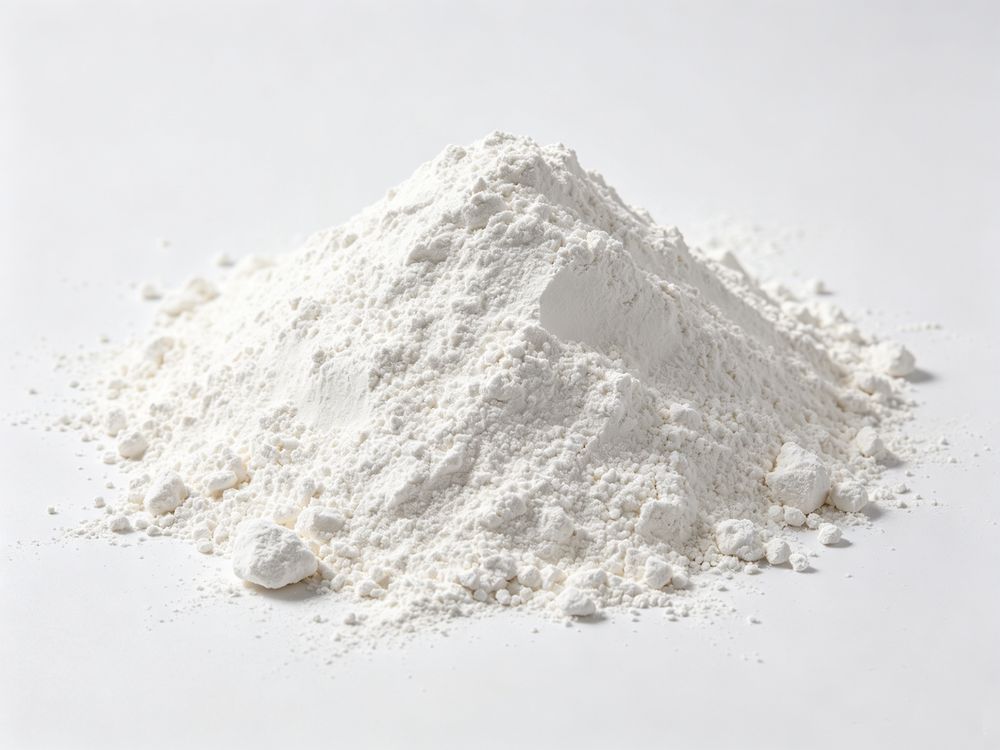
Fine powder, white
Visual
Moisture content
≤ 10%
105°C, 2 hours
Bulk density
0.40–0.60 g/cm³
—
Viscosity (3% in water, 25°C)
≥ 3,000 mPa·s
Brookfield viscometer
Fineness
≥ 95% passing 74 μm (200 mesh)
Sieve analysis
Optimal pH range
7.0–8.0
—
Performance Advantages vs CP-EW
Property
CP-EWS
CP-EW
Thixotropy
Higher — stronger gel structure
Standard
Gel transparency
Better — clearer, more colorless
Good
Dispersion speed
Faster hydration
Standard
Viscosity specification
≥3,000 mPa·s at 3% (defined spec)
Not specified
Ceramics application
Yes — ceramic slips and glazes
Not listed
Addition level
0.2–3.0%
0.2–3.0%
Applications and Dosage
Application
Typical Dosage
Key Function
Waterborne industrial paint
0.5–1.5 wt%
Anti-settling, anti-sagging, thixotropy
Emulsion (latex) paint
0.3–1.0 wt%
Anti-settling, storage stability
Water-borne antiseptic coatings
0.5–1.5 wt%
Pigment suspension, anti-sag
Toothpaste and tooth polish
1.0–3.0 wt%
Thickening, abrasive suspension
Cream and lotion (cosmetics)
0.5–2.0 wt%
Suspension, texture, thickening
Water-borne sealant / adhesive
0.5–2.0 wt%
Non-sag, extrusion profile
Ceramics slip and glaze
0.3–1.5 wt%
Particle suspension, flow control
Pigment blunge water
0.2–0.8 wt%
Pigment suspension
Ceramics Application: CP-EWS prevents ceramic particle settling in aqueous slips during storage between production cycles — maintaining uniform pigment and filler distribution. The thixotropic gel allows the slip to flow during spraying or dipping application while holding particles in suspension at rest. This eliminates the need for manual re-stirring of settled slips and improves consistency of the final glazed surface.
Incorporation Procedure
Prepare water phase at pH 7.0–8.0 — adjust if needed; pH outside this range reduces gel performance
Add CP-EWS powder directly to water at 0.2–3.0% of total formulation
Disperse at high speed for 20–30 minutes — high-shear disperser or dissolver
CP-EWS is an improved grade with higher thixotropy, better gel transparency, faster dispersion, and a defined viscosity specification (≥3,000 mPa·s at 3%). CP-EWS also covers ceramics applications. Both grades use direct powder addition at 0.2–3.0% in water at pH 7.0–8.0. Choose CP-EWS for specification-critical applications or when higher performance at equivalent dosage is required. CP-EW details →
What is CP-EWS used for in ceramics?
In ceramics, CP-EWS prevents settling in ceramic slips and glazes during storage, controls flow during spray or dip application, and improves glaze consistency. The thixotropic gel structure holds ceramic particles uniformly at rest but flows under application shear. Used at 0.3–1.5% in aqueous ceramic slips.
What viscosity does CP-EWS achieve in water?
CP-EWS achieves minimum 3,000 mPa·s at 3% in water at 25°C (Brookfield viscometer). Higher concentrations (5–8%) achieve 8,000–15,000 mPa·s depending on pH and water quality. Optimal performance at pH 7.0–8.0. For higher viscosity requirements, use CP-WBS (10,000–13,000 mPa·s at 10%).
Packaging and Storage
Parameter
Specification
Standard packaging
25 kg kraft paper bags with PE inner liner
Shelf life
2 years from manufacture date
Storage conditions
Cool, dry warehouse; protect from moisture — water-based grades absorb ambient moisture more readily