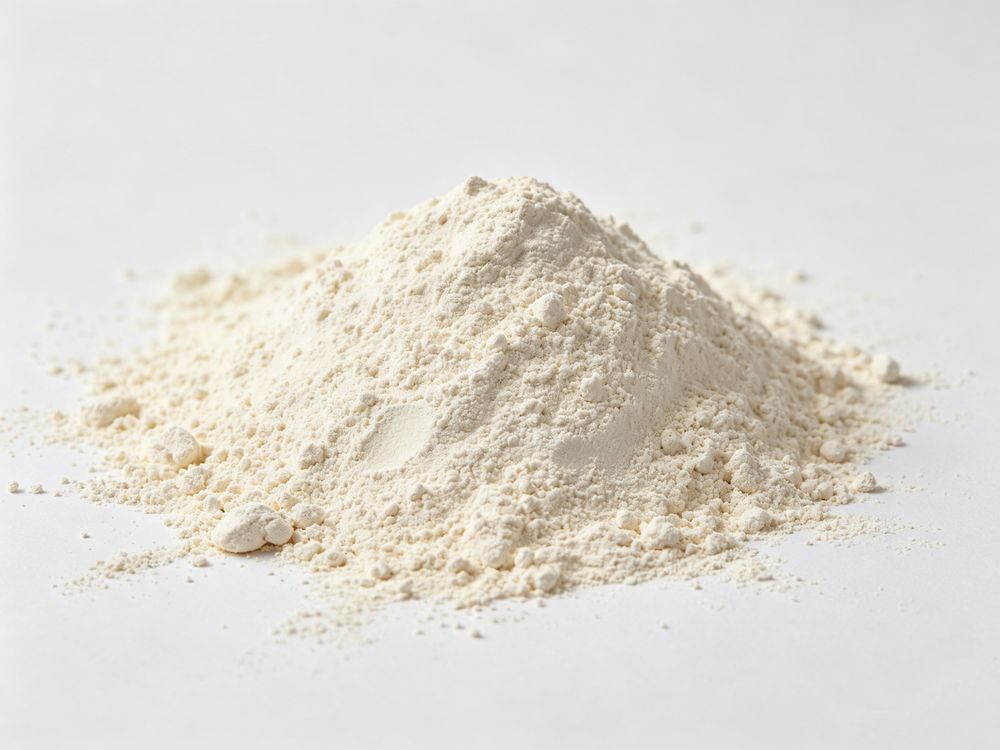
Wet-process organophilic clay viscosifier for synthetic base fluids, low-BTEX mineral oils, and diesel. Disperses faster with less shear than conventional OBM organoclay. High gel efficiency in alpha olefin and low-aromatic base fluid systems.
CP-992 is a wet-process organophilic clay developed as an improved-performance viscosifier for oil-based and invert emulsion drilling fluids. The wet-process manufacturing route produces a more uniformly modified clay surface compared to dry-process grades, resulting in faster gel development, easier dispersion at lower shear rates, and superior performance in low-aromatic and synthetic base fluid systems. CP-992 is particularly suited for low-BTEX LTOBM formulations used in offshore operations where environmental regulations restrict aromatic content.
Technical Properties
Parameter
Specification
Test Method
Chemical composition
Organically modified bentonite clay (wet process)
—
Appearance
Off-white to tan finely divided powder
Visual
Moisture content
≤ 3.5%
105°C, 2 hours
Loss on ignition (LOI)
35–39%
1000°C
Particle size
≥ 95% passing 150 mesh (100 μm)
Sieve analysis
Performance Advantages vs Conventional OBM Organoclay
Rapid yield development — reaches target yield point faster than dry-process grades under equivalent mixing conditions; reduces rig wait time during mud mixing
Easy dispersing with less shear — effective in rig-site mixing conditions where high-shear equipment may be limited; suitable for jet-hopper addition
High efficiency in synthetic and low-aromatic fluids — outperforms conventional grades in alpha olefin, internal olefin, and low-BTEX mineral oil base fluids
Cost-effective yield point and gel strength — achieves target rheology at competitive treat rates in standard OBM formulations
Emulsion stability support — contributes to invert emulsion stability under downhole shear and temperature conditions
Reliable barite suspension — adequate gel strength to prevent weighting material sagging in deviated and horizontal well sections
Compatible Base Fluids
Base Fluid Type
Application
Typical Treat Rate
Diesel oil
Standard OBM, invert emulsion
5–14 kg/m³
Low-BTEX mineral oil (LTOBM)
Offshore environmental compliance OBM
6–15 kg/m³
Mineral oil (standard)
All-mineral oil system, invert emulsion
5–14 kg/m³
Synthetic base oil (internal olefin, LAO)
Synthetic-based mud (SBM) offshore/deepwater
6–15 kg/m³
Alpha olefins (linear)
Ultra-low-toxicity SBM
6–16 kg/m³
Crude oil
Workover, completion fluids
5–12 kg/m³
CP-992 vs CP-982 Selection: Choose CP-992 when working with synthetic base fluids (alpha olefins, internal olefins), low-BTEX mineral oils, or when rapid gel development with minimal shear is required. Choose CP-982 for standard diesel and mineral oil OBM at lower cost where extended mixing time is available. Both grades meet API 13A organophilic clay performance criteria.
Drilling Fluid Applications
Fluid Type
Function
Oil-based drilling fluids (OBM)
Primary viscosifier, yield point builder
Invert emulsion fluids
Viscosifier, emulsion structure support
Synthetic-based muds (SBM)
Gel strength, cutting suspension in low-polarity base fluids
Workover fluids
Viscosity control, solids suspension
Completion fluids
Suspension of bridging agents and solids
Packer and casing fluids
Gel strength for long-term static stability
Spotting fluids
Pipe-freeing spotting fluid viscosity
Incorporation Method
Add CP-992 directly to base oil through the hopper or mixing system — jet-hopper addition is effective due to the easy-dispersing nature of CP-992
Mix at highest available shear for 15–20 minutes minimum
Check initial rheology (yield point, gel strength) before adding emulsifiers
Add emulsifiers and wetting agents after CP-992 is dispersed
Add water phase gradually to form invert emulsion while maintaining high shear
Weight up with barite incrementally; re-check rheology after weighting
Frequently Asked Questions
What is the difference between CP-992 and CP-982?
CP-992 is a wet-process improved grade: disperses faster with less shear, performs better in synthetic and low-BTEX base fluids, and has higher LOI (35–39%) indicating more organic modifier for non-polar systems. CP-982 is cost-effective for standard diesel/mineral oil OBM where extended mixing time is available. Both meet API 13A criteria. Use CP-992 for synthetic SBM, low-BTEX LTOBM, or when rapid gel development is critical. CP-982 technical data →
What base fluids is CP-992 designed for?
CP-992 is optimized for low-BTEX mineral oils (LTOBM offshore), synthetic base oils (internal olefins, linear alpha olefins, esters), and standard mineral oil and diesel OBM. The wet-process manufacture provides superior gel development in non-polar synthetic systems versus dry-process conventional organoclay grades at equivalent treat rates.
Does CP-992 require a polar activator?
No separate polar activator is required for drilling fluid applications. CP-992 is added directly to the base oil under high-shear mixing. The wet-process surface treatment provides self-activating gel development under rig-site mixing conditions. This simplifies mud mixing procedures compared to coatings-grade organoclay that requires ethanol or methanol activation.
Packaging and Storage
Parameter
Specification
Standard packaging
25 kg kraft paper bags with PE inner liner; 22.68 kg bags available