Instant Connect

Scan to connect via WhatsApp or WeChat
A water-compatible modified montmorillonite grade for building thixotropy, suspension and viscosity in qualified aqueous formulations.
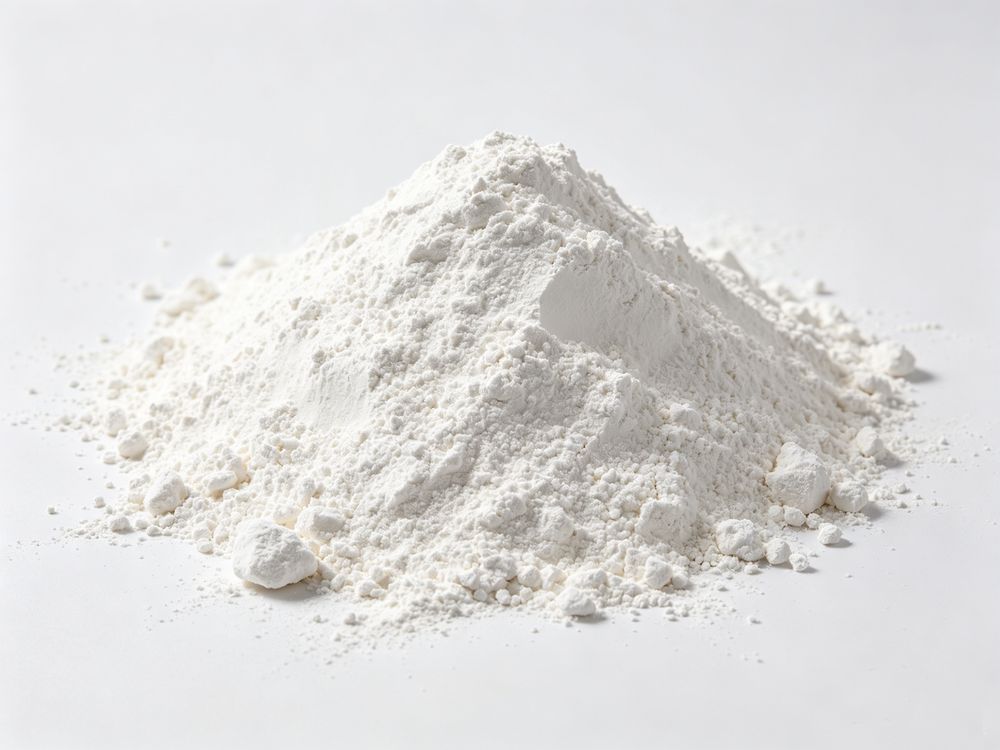
A water-compatible modified montmorillonite grade for building thixotropy, suspension and viscosity in qualified aqueous formulations.
| Product | Best for | System type | Activation method | Main benefit | Limitation |
|---|---|---|---|---|---|
| CP-187 | Waterborne coatings and documented adjacent aqueous formulations | Aqueous / water-based | Confirm hydration and dispersion procedure in the current TDS | Thixotropy, suspension, anti-sag and viscosity control | Not positioned for solventborne systems; final use level requires testing |
| Parameter | Published value | Scope / note |
|---|---|---|
| Composition | Inorganic modified montmorillonite clay | Same-company CP-187 product source |
| Appearance | Free-flowing off-white powder | Visual description |
| Moisture | ≤12% | 105°C for 2 hours |
| Bulk density | 0.55–0.65 g/cm³ | Published grade specification |
| Fineness | ≥95% passing 74 μm | Sieve reference |
| Heavy metal (Pb) | ≤15 mg/kg | Published grade limit |
| Experimental screening range | 0.2–8.0 wt% | Broad laboratory envelope only; not a CP-187 specification |
| Dispersion / activation | Confirm with current TDS | Order, shear, hydration time, pH and temperature are formulation-specific |
| Packaging | 25 kg, 50 lb or 600 kg | Confirm current availability |
| Shelf life | 2 years | Store cool, dry and ventilated |
Use the current CP-187 TDS to confirm whether the grade should be pre-hydrated or added directly. Water quality, pH, binder chemistry, mixing energy and the timing of surfactants can all change the result.
The 0.2–8.0 wt% figure is an experimental screening range covering very different aqueous formulations. It is not a guaranteed operating window, a finished-product specification or a default starting dosage. Final use level must come from formulation testing and current technical guidance.
| Grade | Use when | Selection boundary |
|---|---|---|
| CP-187 | A waterborne formulation needs a model-specific rheology evaluation | The broad 0.2–8.0% envelope is for screening only |
| CP-EW | The existing water-based grade data better matches the binder and target | Do not assume identical hydration or dosage |
| CP-WBS | The current TDS identifies it for the target waterborne formulation | Compare pH, water quality and application data |
| Observed issue | Check first | Practical next step |
|---|---|---|
| Low viscosity | Water quality, pH, binder compatibility, hydration and addition order | Obtain the current procedure and repeat a controlled dosage ladder |
| Settling remains | Pigment density, solids loading and maturation time | Compare the control with fully hydrated trials at fixed conditions |
| Poor leveling or excessive drag | Over-structuring, shear history and the full rheology package | Balance anti-sagging and leveling instead of optimizing one value alone |
| Batch variation | Lot COA, moisture and actual mixing conditions | Send the formulation and test record to technical support |
Technical owner: Camp-Shinning Application Technology Team, China. Product selection and final use level should be confirmed against the current TDS, SDS, lot COA and formulation test results.
Last reviewed: September 24, 2026
Product resources: all organoclay products · Product Finder
Related products: Water-based organoclay grades · CP-EW · CP-WBS
Related applications: Paint & Coatings · Adhesives & Sealants · Construction
Related formulation goals: Anti-Sagging · Viscosity Control
Share your binder or base fluid, solvent system, solids level, processing equipment and target rheology. Camp-Shinning will confirm the current documents and recommend a formulation-specific evaluation plan.
We reply within 24 hours on business days.
Thank you! Your inquiry has been received.
We'll get back to you within 24 hours.
WeChat ID
0086-13185071071