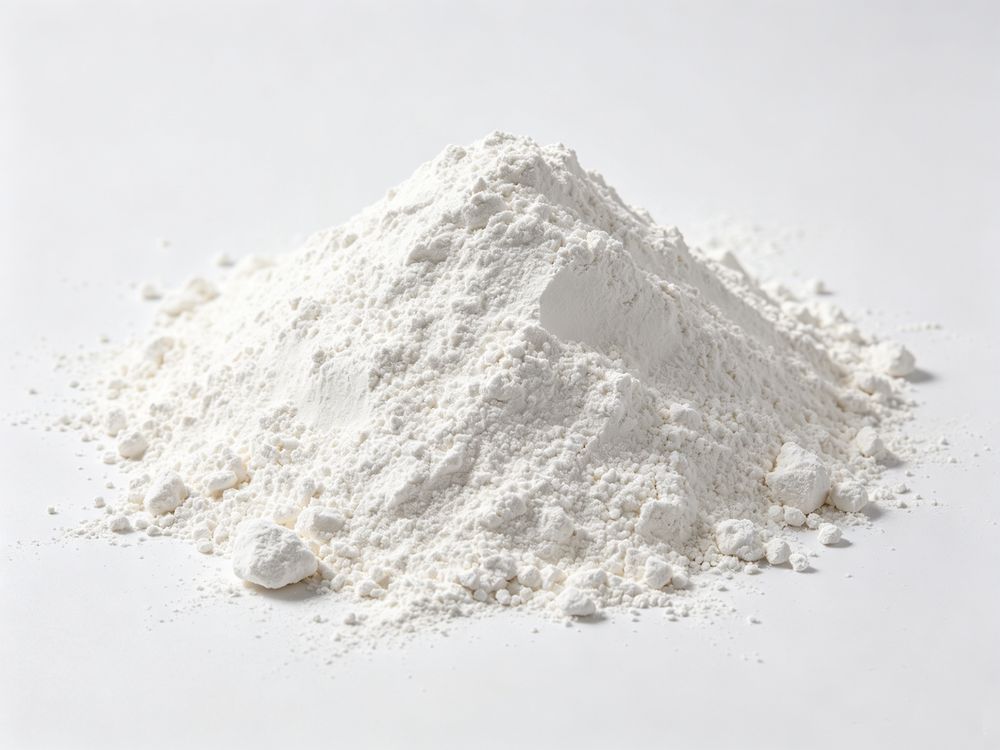
CP-OC is an API-specification natural sodium bentonite for freshwater water-based rotary drilling mud. Unlike organoclay grades in the CP range — which are organically modified for oil-based drilling fluids — CP-OC is unmodified sodium bentonite that hydrates and swells in water to build viscosity, suspend cuttings, control filtration, and seal borehole walls. CP-OC meets API Specification 13A performance requirements and is suitable for all freshwater rotary drilling applications including oil and gas exploration wells, water wells, geothermal drilling, and horizontal directional drilling (HDD).
API Performance Specifications
| Parameter | API 13A Specification | CP-OC Typical Value | Test Method |
|---|
| Viscometer dial reading at 600 rpm | ≥ 30 | 35 | API RP 13B-1 |
| Yield point / plastic viscosity ratio | ≤ 1.5 | 1.4 | API RP 13B-1 |
| API filtrate volume | ≤ 12.5 mL | 12 mL | API RP 13B-1 |
| Residue retained on 200 mesh | ≤ 2.5% | 2.0% | Sieve analysis |
Drilling Functions
- Viscosity building — sodium bentonite swells dramatically in fresh water, building viscosity to carry drill cuttings from the bit to surface
- Cutting suspension — gel structure suspends cuttings when circulation stops, preventing settling around the drill string
- Filtration control — bentonite platelet filter cake reduces fluid loss to permeable formations, preventing wellbore collapse and formation damage
- Borehole wall sealing — clay platelets accumulate on porous formation walls, sealing against fluid invasion and providing borehole stability
- Drill bit cooling and lubrication — circulating mud carries heat away from the bit and reduces bit-to-formation friction
- Density adjustment — mud weight can be adjusted by controlling bentonite concentration; base for further weighting with barite
Mixing and Dosage
| Application | Typical Dosage | Notes |
|---|
| Standard freshwater rotary mud | ~22.7 kg/m³ (8 lb/bbl) | ~1 tonne per 100 bbl |
| High-viscosity sweep | 45–90 kg/m³ | Short-duration high-viscosity pill |
| Earthen structure sealing (slurry) | 30–60 kg/m³ water | Slurry wall, clay blanket |
| Slurry trench stabilization | 30–50 kg/m³ | Bentonite slurry support |
| HDD pilot bore | 20–40 kg/m³ | Borehole stability, cuttings transport |
Water Quality Effect: CP-OC performance is sensitive to make-up water quality. Hard water (Ca²⁺, Mg²⁺) and salt water reduce bentonite swelling and viscosity by competing with Na⁺ on the clay interlayer. Pre-treat hard water with soda ash (Na₂CO₃) to pH 8.5–9.5 before adding bentonite. Do not use salt water or sea water with CP-OC — for salt-water or seawater drilling, use polymer-based systems or attapulgite (not sodium bentonite).
Incorporation Method
- Check make-up water quality — measure hardness, pH, and chloride; pre-treat with soda ash if Ca²⁺ > 200 ppm or pH < 7.5
- Add CP-OC slowly through jet/hopper mixer — avoid adding in bulk; lump formation reduces efficiency
- Allow full hydration time — bentonite requires 30–60 minutes circulation to fully hydrate and develop maximum viscosity
- Check API rheology after full hydration; adjust dosage to achieve target viscosity
- Increase density if required by adding barite after bentonite is fully hydrated
Additional Applications
Beyond drilling, CP-OC is used as a sealing and stabilization material in civil engineering:
- Earthen structure sealing — bentonite blankets and barriers for pond, lake, and dam sealing
- Slurry trenching — bentonite slurry supports trench walls during excavation for cutoff walls and utility installation
- Tunnel boring — bentonite slurry provides face support in shield tunneling
- Foundation drilling — borehole stability during large-diameter caisson and pile installation
Use as a Water-Based Thickening & Suspending Agent
CP-OC's natural sodium bentonite also functions as a general-purpose thickening, suspending, and anti-settling agent for water-based systems beyond drilling. When dispersed in water, the clay platelets hydrate and swell, building a thixotropic gel network that increases viscosity at rest while shear-thinning under agitation — the same mechanism that suspends drill cuttings also suspends pigments and fillers in aqueous formulations.
Typical Water-Based Applications
- Water-based paints and coatings — anti-settling for pigments and extenders, sag resistance on vertical surfaces, viscosity build for economy-grade latex and emulsion paints
- Water-based inks — pigment suspension and viscosity stabilization in aqueous flexographic and gravure ink systems
- Aqueous industrial fluids — suspending agent for water-based cutting fluids, polishing slurries, and cleaning formulations
| System | Typical Dosage | Notes |
|---|
| Water-based paint (anti-settling) | 0.3–1.5 wt% | Pre-disperse in water before adding to mill base |
| Water-based ink | 0.5–2.0 wt% | Add to aqueous phase under high shear |
| General aqueous suspension | 0.5–3.0 wt% | Adjust to target viscosity; pre-hydrate 30–60 minutes |
CP-OC vs. Organoclay Water-Dispersible Grades: CP-OC is unmodified sodium bentonite — it hydrates directly in water without any surface treatment, making it a cost-effective general thickener for standard water-based formulations.
CP-EW,
CP-EWS, and
CP-WBS are organically modified organoclay grades engineered for higher-performance waterborne coatings, with finer particle size and more controlled rheology profiles. For standard aqueous thickening, CP-OC is the economical option; for engineered waterborne coating performance, see
water-based organoclay grades.
Frequently Asked Questions
What is the difference between CP-OC drilling bentonite and organoclay?
CP-OC is unmodified sodium bentonite that swells in water — for freshwater water-based drilling mud. Organoclay grades (CP-34, CP-982, CP-992) are organically modified bentonite that disperses in oil — for oil-based drilling fluids (OBM). Use CP-OC for water-based mud systems; use organoclay grades for OBM and invert emulsion systems. The two product types are not interchangeable.
Does CP-OC meet API Specification 13A for drilling bentonite?
Yes. CP-OC meets API 13A requirements: viscometer at 600 rpm ≥30 (typical 35); YP/PV ratio ≤1.5 (typical 1.4); API filtrate ≤12.5 mL (typical 12 mL); 200-mesh residue ≤2.5% (typical 2.0%). These are the minimum performance specifications for bentonite used in freshwater rotary drilling. API test reports available on request.
How much CP-OC is needed per barrel of drilling mud?
Approximately 1 tonne of CP-OC prepares 100 barrels (15,900 L) of standard freshwater drilling mud (~22.7 kg/m³ dosage). Pre-treat hard or acidic water with soda ash to pH 8.5–9.5 before adding. Add slowly through jet/hopper mixer and allow 30–60 minutes full hydration before checking rheology. Dosage increases for higher-viscosity sweeps or difficult formations.
Can CP-OC be used as a thickener for water-based paint or ink?
Yes. As unmodified sodium bentonite, CP-OC hydrates and swells in water to build a thixotropic gel network that suspends pigments and fillers — typical dosage 0.3–1.5 wt% for paint anti-settling and 0.5–2.0 wt% for water-based inks, pre-dispersed under high shear. For engineered waterborne coating performance with finer particle size and controlled rheology, see CP-EW, CP-EWS, and CP-WBS instead.
Packaging
| Parameter | Specification |
|---|
| Standard packaging | 25 kg bags; 50 kg bags; 800 kg or 1,000 kg super sacks |
| Storage conditions | Dry, covered warehouse; protect from moisture |
Related organoclay drilling grades (oil-based mud): CP-982 ·
CP-992 ·
CP-31 (self-activating)
Related applications: Oil-Based Drilling Fluids ·
Water-Based Drilling ·
Paint & Coatings ·
Printing Ink