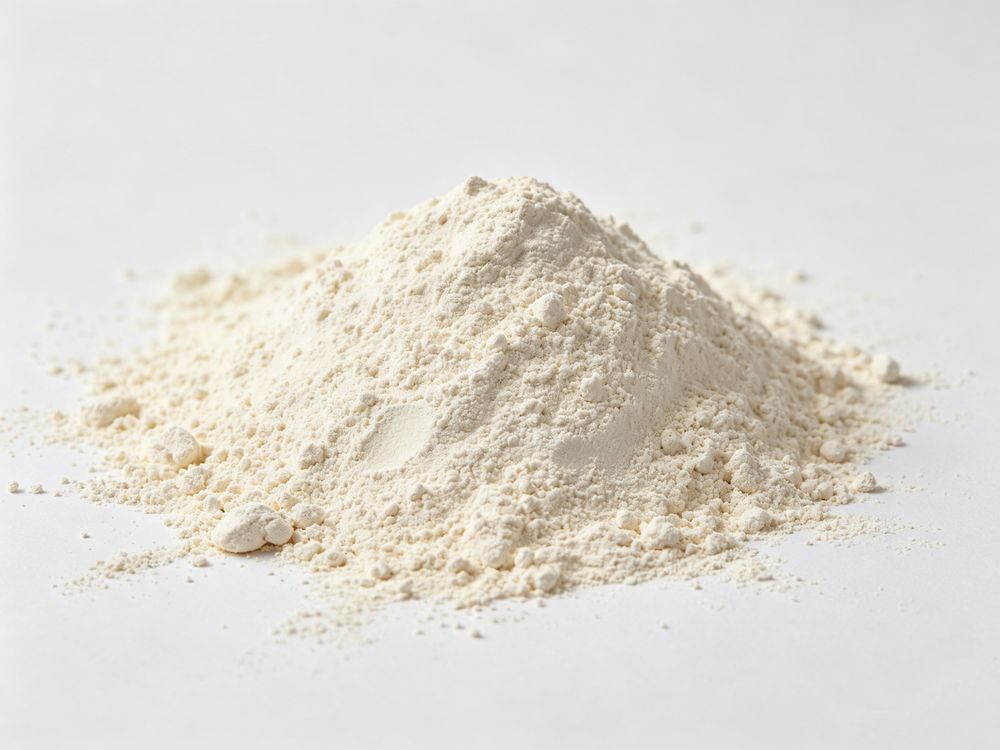
CP-RL is a solvent-based organophilic clay functioning as both a plasticity modifier in nonpolar systems and a general thixotropic rheology additive for industrial applications. The self-activating surface modification allows direct powder addition across a wide polarity range — from nonpolar mineral spirits and aliphatic solvents to medium-high polarity aromatic blends — without pre-gel preparation. Fine dispersion fineness (≤20 μm) ensures smooth texture in industrial coatings and cosmetic formulations. The combination of easy dispersibility, wide polarity compatibility, and plasticity control makes CP-RL a versatile production grade.
Technical Properties
| Parameter | Specification | Test Method |
|---|
| Chemical composition | Organic derivative of montmorillonite clay | — |
| Appearance | Fine powder, light yellow | Visual |
| Moisture content | ≤ 3.5% | 105°C, 2 hours |
| Loss on ignition (LOI) | ≤ 33% | 1000°C |
| Bulk density | 0.35–0.45 g/cm³ | — |
| Fineness | ≥ 98% passing 74 μm (200 mesh) | Sieve analysis |
| Dispersion fineness | ≤ 20 μm | Hegman/fineness gauge |
Performance Characteristics
- High efficiency — effective gel performance at 0.2–2.0% treat rate across the full polarity range
- Fine particle size, easy dispersing — rapid dispersion under standard high-shear conditions without grinding blockage
- Direct powder addition — no pre-gel preparation; simplifies production workflow
- Consistent rheology development — reproducible thixotropy and plasticity profile batch-to-batch
- Post-correction capability — viscosity and consistency adjustable after formulation without batch rejection
- Plasticity modification in nonpolar systems — builds structured yield stress that enables plastic (non-Newtonian) flow in aliphatic and mineral oil systems
Applications and Dosage
| Application | Typical Dosage | Primary Function |
|---|
| Nonpolar system plasticity modifier | 0.5–2.0 wt% | Yield stress building in aliphatic/mineral oil formulations |
| Industrial paints (mainly) | 0.3–1.2 wt% | Anti-settling, anti-sagging, thixotropy |
| Sealants and adhesives | 0.5–2.0 wt% | Non-sag, extrusion profile, plasticity |
| Printing inks | 0.5–2.0 wt% | Anti-settling, tack and body control |
| Cosmetics (anhydrous) | 1.0–5.0 wt% | Suspension, plasticity in anhydrous cosmetics |
| Nano-composites | 1.0–10 wt% | Clay platelet dispersion in polymer systems |
Plasticity vs Thixotropy: Standard organoclay grades provide thixotropy — viscosity that changes with shear rate and recovers after shear. CP-RL goes further in nonpolar systems by providing plasticity modification — a defined yield stress below which the material behaves as a solid (no flow), and above which it flows with shear-thinning behavior. This plasticity character is critical for putty, heavy-body sealants, and nonpolar material systems where simple viscosity control is insufficient.
Incorporation Method
- Add CP-RL as dry powder before grinding — grinding shear aids complete exfoliation
- No polar activator required for direct addition; optional activator at 20–30% of CP-RL weight improves performance in pure aliphatic/low-polarity systems
- High-shear dispersion at 1,500–2,500 rpm for 10–15 minutes
- Post-correct if needed after full formulation assembly
Frequently Asked Questions
What is a plasticity modifier and how does CP-RL function as one?
A plasticity modifier controls deformation behavior — giving material a yield stress so it resists flow under light stress (holds shape) but flows under working shear (easy to apply). CP-RL builds a thixotropic clay platelet network in nonpolar organic systems that creates this plastic behavior — critical for putties, heavy sealants, and alkyd-based formulations where simple viscosity control is insufficient. The structured yield stress prevents sagging at rest while allowing application at working shear.
What polarity range does CP-RL cover?
CP-RL covers low to medium-high polarity: aliphatic solvents (mineral spirits, naphtha), aromatic solvents (xylene, toluene), and mixed aliphatic/aromatic blends. Self-activating across this range without polar activator. For highly polar systems (ketones, esters),
CP-APA provides better-matched self-activating performance. Both can accept optional polar activator for maximum performance in low-polarity ends of their respective ranges.
Packaging and Storage
| Parameter | Specification |
|---|
| Standard packaging | 25 kg kraft paper bags with PE inner liner |
| Shelf life | 2 years from manufacture date |
| Storage conditions | Cool, dry, well-ventilated warehouse; avoid moisture |
Related grades: CP-APA (self-activating, high-polarity) ·
CP-VZ (self-activating, ≤20μm, resin-specific) ·
CP-34 (highest gel strength with activator)
Related applications: Industrial Paints ·
Sealants & Adhesives ·
Viscosity Control