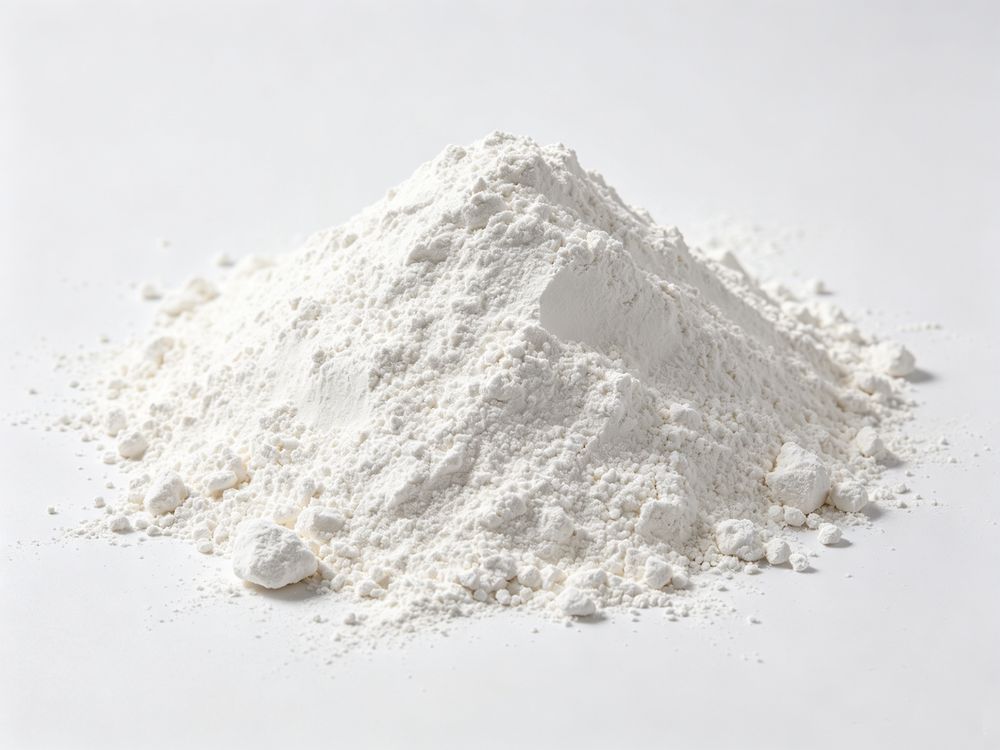
Organic modified clay dispersible in both aqueous and solvent systems. HEC and HPMC replacement for waterborne coatings, construction mortar, ceramics, and textile printing. THICKENT W3: 1,500–2,500 mPa·s at 2% in water. Superior water retention, high thixotropy, cold and hot water dispersibility.
THICKENT W is a specially organic modified clay with the unique capability of dispersing in both aqueous and solvent-based systems — unlike standard clay thickeners that work only in water, or standard organoclay that works only in oils/solvents. This dual-system compatibility makes THICKENT W a versatile thickener and HEC/HPMC replacement for waterborne coatings, construction mortar, ceramics, and textile printing applications. Superior water retention, broad temperature dispersibility (both cold and hot water), and high thixotropy provide performance advantages over cellulose ether thickeners at equivalent or lower dosage.
Technical Properties — THICKENT W3
Parameter
Specification
Test Method
Composition
Special organic modified clay
—
Appearance
White powder
Visual
Particle size (200 mesh)
≥ 95% passing
Sieve analysis
Moisture content
≤ 12%
—
Bulk density
430 kg/m³
—
Viscosity (2% in water, 25°C, RV7@60rpm)
1,500–2,500 mPa·s
Brookfield DV-II
pH (solution)
8.0–10.0
—
System compatibility
Aqueous and solvent systems
—
Performance Advantages vs HEC / HPMC
Property
THICKENT W
HEC
HPMC
Water retention
Superior
Good
Good
Cold water dispersibility
Yes
Yes
No (requires cold water)
Hot water dispersibility
Yes
Yes
No (gels in hot water)
Solvent system compatibility
Yes (dual system)
No
No
Thixotropy
High
Low-moderate
Low-moderate
Adhesion and strengthening
High
Moderate
Moderate
Coordination with cellulose
Good (80:20 blend)
—
—
Blending with HEC/HPMC: THICKENT W can be used at 80% THICKENT W3 + 20% HEC or HPMC in construction mortar applications. The blended system maintains the water retention and viscosity performance of 100% cellulose ether while reducing cellulose ether consumption by 80%. This blending strategy is a cost-reduction approach for mortar formulators while maintaining target performance specifications.
Applications and Dosage
Application
Typical Dosage
Key Function
Cement-based mortar (tile adhesive, plaster)
0.1–0.4 wt%
Water retention, workability, anti-sag
Putty (wall filler)
0.1–0.3 wt%
Consistency, water retention, adhesion
Waterborne coatings
0.3–1.0 wt%
Thickening, anti-settling, storage stability
Ceramics (slip and glaze)
0.2–0.8 wt%
Suspension, flow control
Textile printing paste
0.5–2.0 wt%
Paste thickening, adhesion, color fixation
Incorporation Method
Aqueous Systems (Mortar, Coatings)
Add THICKENT W directly to water (cold or hot — both work)
Disperse at moderate agitation for 10–20 minutes until fully hydrated
Add dry components (cement, sand, fillers) and mix thoroughly
For mortar blend with cellulose: pre-blend THICKENT W3 (80 parts) + HEC or HPMC (20 parts) before adding to water
Frequently Asked Questions
How does THICKENT W replace HEC or HPMC?
THICKENT W replaces HEC and HPMC in waterborne coatings and construction mortar with advantages: superior water retention; cold and hot water dispersibility (HPMC only disperses in cold water); dual-system compatibility (works in solvents too); higher thixotropy; better adhesion in mortar. Typical blend: 80% THICKENT W3 + 20% HEC/HPMC in mortar for cost reduction while maintaining performance. Direct replacement at same dosage level for mortar applications.
Can THICKENT W be used in solvent-based systems?
Yes — THICKENT W is uniquely dispersible in both aqueous and solvent systems. Standard HPMC and HEC function only in water. THICKENT W's dual-system compatibility extends to solvent-based adhesives, coatings, and textile printing systems where cellulose ethers cannot be used. Specific compatibility should be evaluated for the target solvent system.
What is the viscosity of THICKENT W3 at 2% in water?
THICKENT W3 achieves 1,500–2,500 mPa·s at 2% in water at 25°C (Brookfield RV7 at 60 rpm), pH 8.0–10.0. This covers most waterborne paint thickening and medium-build mortar requirements. Increase concentration above 2% for higher viscosity targets. THICKENT W coordinates well with HEC/HPMC — use 80:20 THICKENT W:cellulose blend for mortar applications.
Packaging and Storage
Parameter
Specification
Standard packaging
25 kg bags
Storage conditions
Dry, covered warehouse; protect from moisture
Related water-based products:CP-EW (water-based organoclay for coatings/cosmetics) ·
CP-EWS (improved water-based organoclay) ·
CP-WBS (high-viscosity water-based organoclay)