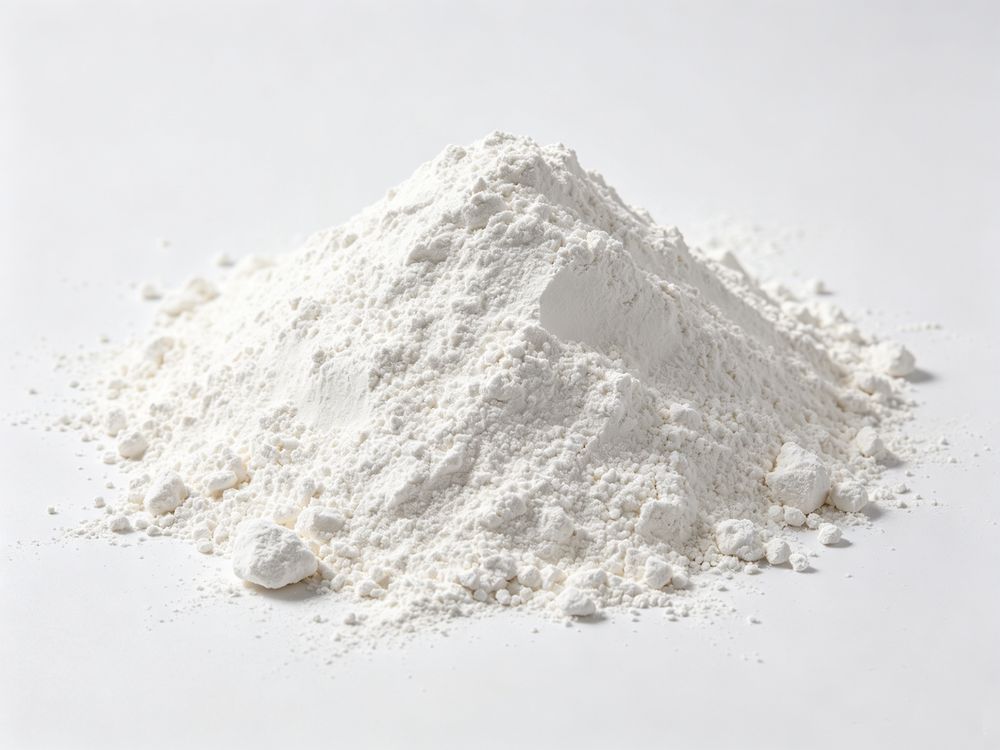
THICKENT is a nonionic cellulose-bentonite composite made from natural refined cotton, cellulose, and bentonite clay. It dissolves in both cold and hot water to form a milky white transparent solution with thixotropy, water retention, adhesion, suspension, emulsification, film-forming, and mildew-resistant properties. THICKENT is specifically formulated to replace HPMC in construction mortars and waterborne coatings — providing equivalent or superior performance at comparable dosage across multiple application areas.
Viscosity Grades and Specifications
| Grade | Viscosity at 1% (mPa·s, 25°C) | HPMC Equivalent | Typical Applications |
|---|
| THICKENT H | 5,000–6,400 | Highest viscosity range | High-build mortars, thick-film systems |
| THICKENT Y7 | 4,500–6,500 | Replaces 70,000–100,000 mPa·s HPMC | Tile adhesive, high-performance plaster |
| THICKENT Y5 | 2,600–4,000 | Replaces 50,000–70,000 mPa·s HPMC | Standard tile adhesive, wall plaster |
| THICKENT Y | 1,500–2,500 | Moderate viscosity range | Skim coat, thin-layer mortar |
Viscosity measured using Brookfield DV-II, Rotor RV7 at 60 rpm, 25°C water solution.
Common Properties (All Grades)
| Parameter | Specification |
|---|
| Appearance | White powder |
| Particle size | ≥ 90% passing 200 mesh |
| Moisture content | ≤ 8% |
| Bulk density | 580 kg/m³ |
| pH (solution) | 7.0–10.5 |
| Water dispersibility | Cold water and hot water |
Performance Properties
- High water retention — superior to HPMC at equivalent dosage; extends mortar working time and prevents premature drying that reduces bond strength
- High thixotropy — builds stronger gel structure than pure cellulose ether; improves anti-sag on vertical surfaces during mortar application
- High homogeneity — composite structure distributes uniformly in mortar, improving surface smoothness and application consistency
- Mildew resistance — composite formulation provides improved resistance to microbial attack versus pure cellulose ether
- Cold and hot water dispersibility — unlike HPMC (cold water only), THICKENT disperses in both; reduces production constraints and simplifies mixing
- Air-proof performance — reduces microcrack formation in the mortar coating layer during curing
- Salt tolerance — maintains performance in high-salt environments
Applications and Dosage
| Application | Typical Dosage | Key Function |
|---|
| Cement-based tile adhesive | 0.15–0.40 wt% (dry weight) | Water retention, workability, anti-sag |
| Wall plaster / render | 0.10–0.25 wt% | Water retention, anti-sag, workability |
| Self-leveling underlayment | 0.05–0.15 wt% | Flow control, anti-bleeding |
| Putty / skim coat | 0.10–0.30 wt% | Consistency, sanding performance |
| Waterborne coatings | 0.2–0.8 wt% | Thickening, anti-settling |
| Oil drilling mud | 0.3–1.0 kg/m³ | Fluid loss control, viscosity |
| Cosmetics and detergents | 0.5–2.0 wt% | Thickening, suspension |
Construction Mortar Advantage: In tile adhesive mortar (C2 class per EN 12004), THICKENT Y7 at 0.2–0.35% provides open time of 20–30 minutes, non-sag classification (T), and ≥0.5 N/mm² transverse deformation — meeting typical tile adhesive performance requirements. The cellulose-clay composite structure provides the anti-sag (T classification) characteristic more reliably than pure HPMC at equivalent dosage because the clay component builds a thixotropic yield stress in addition to the cellulosic viscosity contribution.
Frequently Asked Questions
How does THICKENT replace HPMC in construction mortar?
THICKENT replaces HPMC at the same dosage: Y5 replaces 50,000–70,000 mPa·s HPMC; Y7 replaces 70,000–100,000 mPa·s HPMC. Advantages over HPMC: higher thixotropy for better anti-sag; better water retention for longer working time; cold AND hot water dispersibility (HPMC requires cold water); mildew resistance; air-proof microcrack reduction. Bench testing with specific cement and aggregate is recommended before production.
What is THICKENT made from?
THICKENT is a composite of natural refined cotton (cellulose), cellulose derivatives, and bentonite clay. The cellulose component provides water retention, adhesion, and film formation; the bentonite adds thixotropy, suspension, and salt tolerance. The combination provides broader performance than either pure cellulose ether or pure clay thickener — particularly the combination of strong water retention (from cellulose) and high thixotropy (from clay platelets) in construction mortar.
Which THICKENT grade for tile adhesive mortar?
THICKENT Y7 for high-performance tile adhesive (replacing 70,000–100,000 mPa·s HPMC) targeting C2T classification. THICKENT Y5 for standard tile adhesive (replacing 50,000–70,000 mPa·s HPMC). Typical dosage 0.15–0.40% by dry mortar weight. Adjust to achieve target open time (20–30 min) and sag resistance (0 mm slip by EN 1308). Note: THICKENT W series is also available for applications requiring dual aqueous/solvent system compatibility.
THICKENT W details → Packaging and Storage
| Parameter | Specification |
|---|
| Standard packaging | 25 kg bags |
| Storage conditions | Dry, covered warehouse; protect from moisture |
Related products: THICKENT W (dual aqueous/solvent system, HEC replacement) ·
CP-EW (water-based organoclay for coatings) ·
CP-WBS (high-viscosity water-based organoclay)
Related applications: Construction & Building Materials ·
Waterborne Coatings